BALTIMORE
10075 Red Run Boulevard
Suite 401
Owings Mills, MD 21117
(443) 738-4900
FREDERICK
10 North Jefferson Street
Suite 200
Frederick, MD 21701
(240) 220-2415
BETHESDA
7315 Wisconsin Avenue
Suite 400W
Bethesda, MD 20814
(240) 220-2415
US DOJ Reclassifying Cannabis in Conjunction with Drug Enforcement Agency
April 30, 2026
RKW Law Group
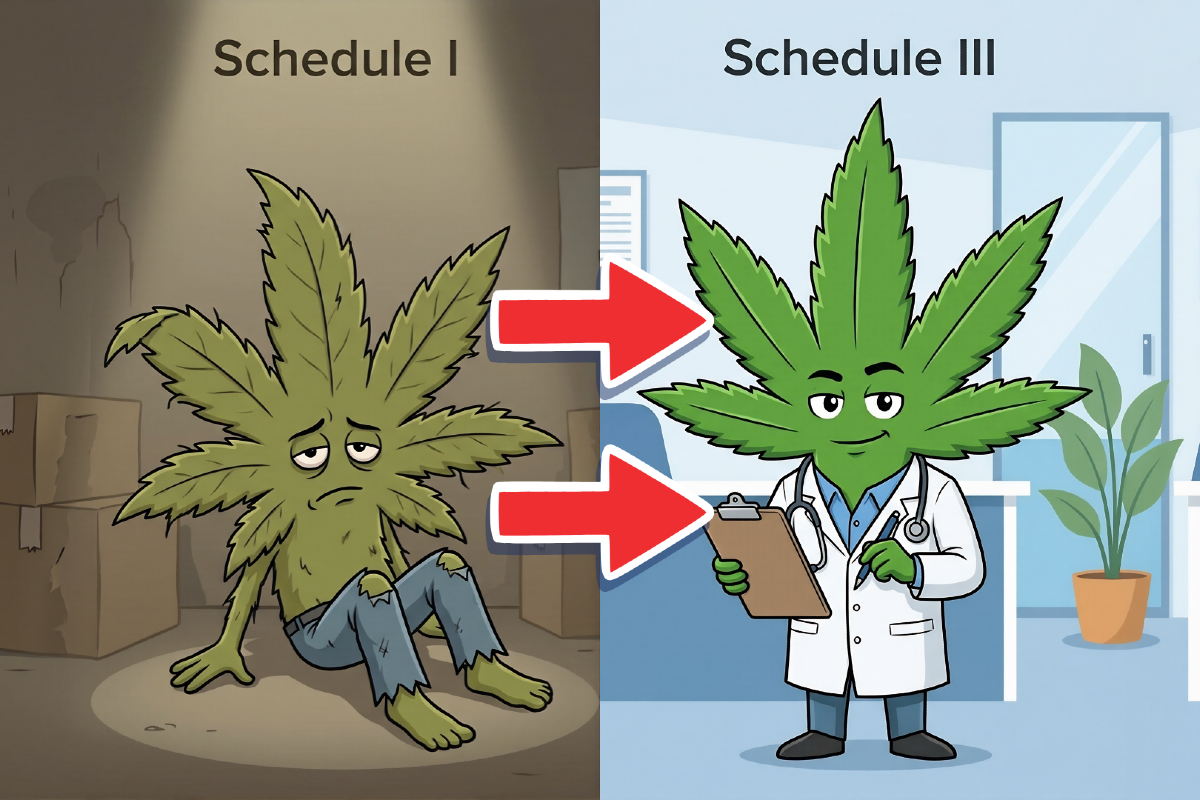
The U.S. Department of Justice (“DOJ”) and the Drug Enforcement Administration (“DEA”) issued an order on April 22, 2026, placing FDA-approved drug products containing marijuana, as well as marijuana in any form covered by a state medical marijuana license, in Schedule III of the Controlled Substances Act. The agencies also announced the initiation of an expedited administrative hearing process for the broader rescheduling of marijuana from Schedule I to Schedule III, with the DEA beginning the hearing on June 29, 2026.
Currently, marijuana is a Schedule I drug, defined as those drugs that have no currently accepted medical use and a high potential for abuse. Schedule I drugs cannot be prescribed by a doctor or legally possessed. Schedule III drugs are defined as those with a moderate to low potential for physical and psychological dependence. Examples of Schedule III drugs include ketamine, codeine, and testosterone – all of which can be prescribed by a doctor and possessed by a person with a valid prescription.
The rescheduling of marijuana will allow for the regular prescription of medical marijuana to patients across the country, regardless of state law.
The DOJ made clear that the rule contains several provisions intended to reduce regulatory burden on compliant state-licensed entities. Generally, the federal government is incorporating the state medical cannabis regulatory systems already in place. Reporting, recordkeeping, and order-form requirements will be limited to what is necessary to satisfy federal and treaty obligations, with the DEA accepting state-required records to the extent possible. Further, state-authorized medical cannabis certifications will be sufficient to permit dispensing to users, and registrants will be permitted to rely on state-law labeling, packaging, disposal, and physical-security requirements.
As a consequence of the Rule, holders of state medical cannabis licenses will no longer be subject to the deduction disallowance imposed by Section 280E of the Internal Revenue Code, which applies only to businesses engaged in "trafficking in controlled substances ... in a schedule I or II," 26U.S.C. 280E. This will allow medical cannabis operators to deduct ordinary and necessary business expenses, such as employee compensation, rent, insurance, and advertising costs.
The Department’s goal of expedited reclassification may create conflicts in existing drug-testing policies. If you have questions about how the reclassification of cannabis may affect your business, reach out to an RKW attorney to learn more.