
BALTIMORE
10075 Red Run Boulevard
Suite 401
Owings Mills, MD 21117
(443) 738-4900
FREDERICK
10 North Jefferson Street
Suite 200
Frederick, MD 21701
(240) 220-2415
BETHESDA
7315 Wisconsin Avenue
Suite 400W
Bethesda, MD 20814
(240) 220-2415
We’ve Come a Long Way, Baby — Or Have We? Is AI Impeding Women’s Progress? The Advent of Digital Misogyny
January 15, 2026
by Laura L. Rubenstein (and wholly supported by RKW)
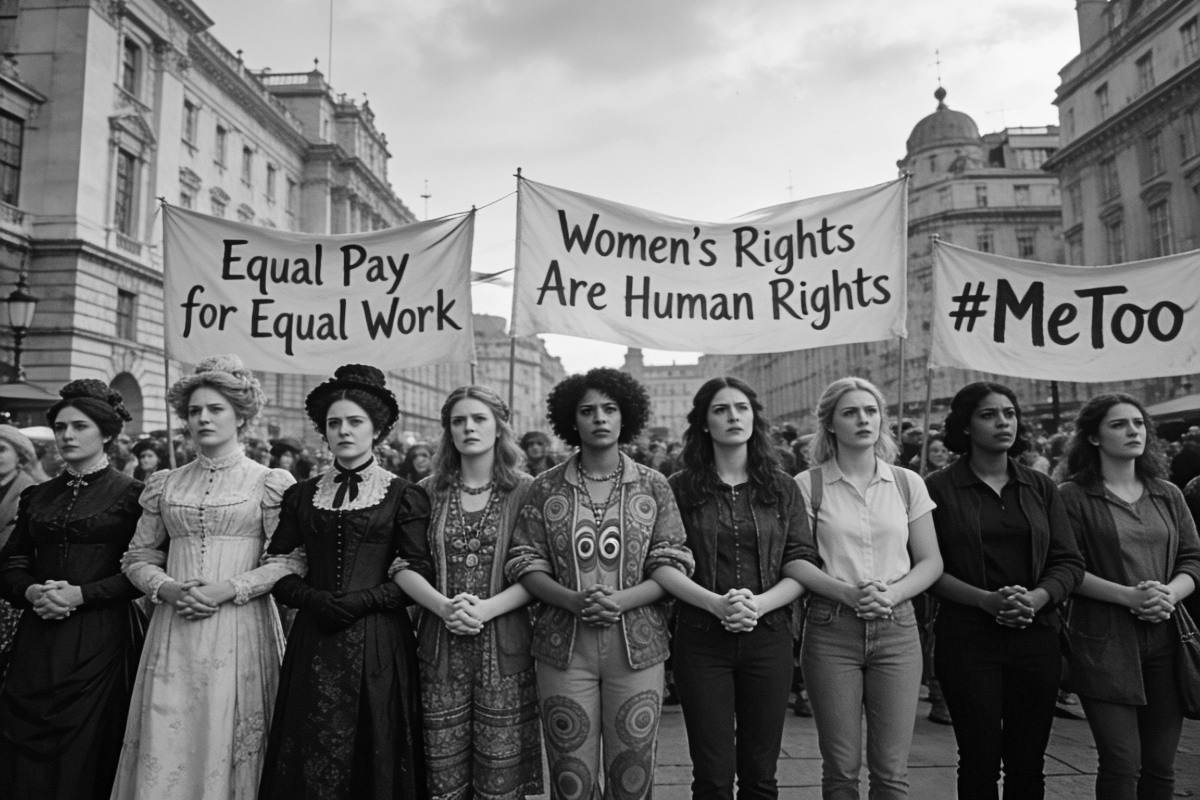
Women in the United States gained the right to vote just over a century ago. That milestone marked not only political recognition, but the beginning of a broader struggle for legal, economic, and professional equality. Since then, women have made undeniable progress. Yet the question remains: How far have we really come—and how fragile are those gains?
The phrase “The Year of the Woman” first gained prominence in 1992, following the election of a record number of women to the U.S. Senate. It resurfaced again in 2018, when a historic 103 women were elected to the House of Representatives. These moments reflected not just electoral success, but a growing insistence that women’s voices belong in leadership.
In the workplace, progress followed the same uneven trajectory. Women secured statutory protections through the Family and Medical Leave Act, pushed back against systemic harassment and abuse during the #MeToo movement, exposed wage discrimination through the Lilly Ledbetter Fair Pay Act, and gained legal recognition of pregnancy-related rights. Each advance was hard-won and long overdue.
Yet recent years have underscored how quickly progress can erode. The overturning of Roe v. Wade marked a profound contraction of reproductive autonomy. More recently, women serving in the U.S. military have seen their effectiveness publicly questioned based on gender — particularly in combat roles — reigniting debates many assumed had been settled. These developments signal a broader reality: women’s rights are not self-executing nor permanently secured.
A recent Washington Post article by Taylor Telford (Dec. 29, 2025) highlighted a striking trend: some women on LinkedIn are modifying their profiles to present as more masculine in an effort to increase engagement and visibility. One woman profiled reported measurable improvements in reach after altering her name and profile presentation.
LinkedIn, for its part, has stated that its AI systems do not use demographic information such as gender to determine content visibility. According to the company, changing gender markers does not affect search or feed placement. Still, as LinkedIn’s head of responsible AI acknowledged, gender bias continues to shape how work and contributions are perceived, particularly in higher-earning fields like finance, technology, and engineering—industries that remain overwhelmingly male-dominated. As one expert noted, technology often reflects societal values—values that may be implicit, unexamined, and deeply ingrained. Algorithms may be designed to be neutral, but they are shaped by human behavior. If users carry bias, that bias can influence outcomes, even absent discriminatory intent.
Academic research reinforces this concern. A 2025 systemic review of literature on female leadership across disciplines concluded that entrenched stereotypes continue to impede women’s advancement into senior leadership. Studies consistently show that once an audience knows a creator is female, the work—whether a résumé, computer program, scientific article, or professional contribution—is often rated as lower quality than identical work attributed to a man.
So yes, women’s equality may have improved, but history—and increasingly, technology—painfully reminds us that progress is neither linear nor guaranteed. As artificial intelligence becomes more embedded in hiring, promotion, and professional visibility, vigilance is essential. Legal frameworks, corporate accountability, and cultural awareness must evolve alongside the tools shaping modern work. Bias is no longer just human, now it’s encoded.
