
BALTIMORE
10075 Red Run Boulevard
Suite 401
Owings Mills, MD 21117
(443) 738-4900
FREDERICK
10 North Jefferson Street
Suite 200
Frederick, MD 21701
(240) 220-2415
BETHESDA
7315 Wisconsin Avenue
Suite 400W
Bethesda, MD 20814
(240) 220-2415
Renting a Property Out to Tenants? 9 Key Legal Tips
September 3, 2026
Dave McRae
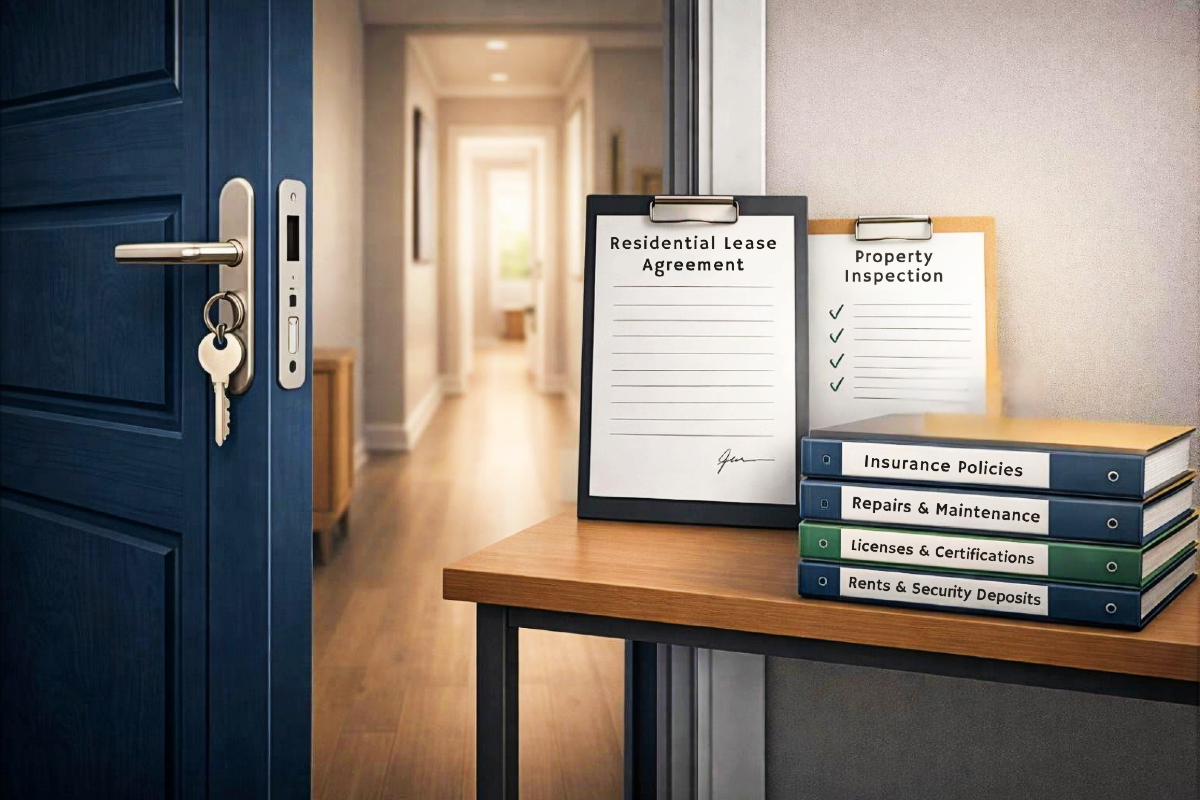
If you own, or expect to acquire, a house or condo unit that you do not need for your own residence and that you are contemplating renting out to tenants, there are a number of things to think about.
First of all, congratulations! Becoming a landlord can be a great and exciting new way to earn valuable income and build your wealth. But renting out a home to tenants also creates legal responsibilities and potential liabilities, and if you are new to this type of endeavor, there can be a lot to learn.
It almost goes without saying that – unless you are leasing the property to a family member or friend for whom you will be doing a favor by charging under-market, reduced, or possibly nominal (or even free) rent – your rental of the property should be economically sensible, i.e., you should be renting to make money, not lose it. This means that sound financial decisions and actions must be made to ensure that you will: (i) charge fair and market-appropriate rent; (ii) make important actions and decisions within the framework of a well and cautiously prepared, comprehensive and error-free budget; and (iii) manage both the income (that is, collecting rents) and expense aspects of your enterprise in a diligent, informed, and responsible manner.
But those essential “business” aspects of your property rental enterprise are not the focus of this article. Here are 9 legal matters that every prospective landlord should think about before renting residential property:
1. Consider Titling (or Re-Titling) the Property in an LLC
As discussed in a prior article about this topic, in most cases the liability protection and other benefits you receive from having your rental and investment real property titled in the name of an LLC owned by you, rather than in your individual name, will substantially outweigh the costs (monetary and otherwise) of establishing and maintaining such an ownership structure.
2. Know the Threshold Legal Requirements for Renting Your Property
Different state, county, and local government agencies, as well as any private parties that may hold any legal interest relating to the property, have different legal requirements when it comes to rental housing. It is important to understand the laws, regulations, and other restrictions that apply specifically to your property before you attempt to offer it for rental.
For example, depending on your property’s location and factual circumstances, any one or more of the following may be threshold requirements to be satisfied before you are allowed to rent the property out:
- Landlord registration and/or rental business license
- Property inspection by an agency (or agency-approved) inspector and certification for rental occupancy
- Property rental registration (which may subject the property to limitations on future rent increases)
- Condo association and/or HOA board notification and approval
- Mortgage lender notification and/or prior consent
3. Make Sure the Property’s Physical Condition Meets or Exceeds Rentability Requirements
Even if the jurisdiction in which your property is located does not impose formal pre-rental inspection and certification requirements, you can be certain that the property is subject to numerous building, housing, and zoning code requirements which must be satisfied by all residential properties, and which receive heightened scrutiny when you lease out the property as a dwelling for others.
Your property must be safe and sanitary and fit for residential occupancy, having no dangerous structural defects or other potentially hazardous conditions and having properly working essential utility systems such as the heating, electrical system, and plumbing system<a id="footnote1-ref" href="#footnote1"><sup>[1]</sup></a>. Your property may also be subject to additional, jurisdiction-specific requirements pertaining to such matters as installation of smoke detectors and carbon-monoxide detectors, and absence of environmental hazards such as mold, lead paint, or radon gas.
Be aware that, under applicable housing laws and regulations, a tenant’s obligation to pay rent may be partially or even fully abated if the dwelling unit is deemed to be unfit for human habitation, provided the tenant: (a) did not cause the damage or other unfit condition, (b) promptly notified the landlord of any needed repairs, and (c) allowed a reasonable time for such repairs to be performed.
4. Use a Written Lease … Preferably a Well-Drafted One
As discussed in a prior article about this topic, it is extremely important that you enter into a written lease with your tenant, which will make both parties’ expectations clear and will provide important protections and guidance if a dispute arises.
Your lease should contain provisions covering the following matters (among others), on terms that comply with applicable legal requirements under the landlord-tenant laws of the jurisdiction in which the property is located:
- Legal names of the landlord and tenant(s)
- Names of all persons who will be residing at the property
- A clear description of the leased premises
- Any of the landlord’s property that will remain at the premises and be available for the tenant’s use
- The minimum rent, installment due date(s), and payment instructions
- Any charges that will be imposed for late rent payments or for returned payments
- Detailed and legally compliant provisions regarding the security, including its amount, how it is to be delivered and receipted, how it is to be held during the lease term (including whether it is legally required to be deposited in an interest-bearing account), how it may be applied by the landlord following any breach by the tenant (including the tenant’s right to elect to be present at any inspection of the property at the beginning and end of the lease term), and how the balance, if any, is to be returned to the tenant after the lease has ended
- The length of the lease term (commonly, but not always, 1 year), and any renewal rights
- Prohibited uses or conduct at the premises
- Which party(ies) is responsible for paying utility bills and any condo fees, HOA dues, etc.
- Insurance coverage(s) that each party is required to maintain
- Indemnification provisions
- The landlord’s and tenant’s respective obligations for maintenance and repairs
- Restrictions regarding such matters as overnight guests, pets, smoking, and the making of alterations to the property (which may include any repainting by the tenant)
- Provisions pertaining to smoke detectors, carbon-monoxide detectors, presence of mold, lead paint (if applicable, depending on the age of the property), and similar health and safety matters
- The landlord’s right to enter upon the property during the lease term to inspect the property, make repairs, or show the property to prospective purchasers, lenders, or tenants
- What constitutes default under the lease, and what are the non-defaulting party’s rights and remedies
- Procedures for each party to deliver notices to the other party
- The contact information for the parties (and for any property manager), especially the phone number(s) the tenant should call for any emergency repair or similar urgent matter at the property
- The tenant’s obligation to vacate and surrender occupancy and return all keys to the landlord at the end of the term, and the required condition of the property when this occurs
- Disclosure as to whether the property is part of any condominium regime or HOA, and, if “yes” to either or both, the furnishing to the tenant of copies of such association’s governing documents, including rules and regulations with which the tenant will be required to comply
- Any rights and procedures for early lease termination (including any provisions required by law allowing same, in circumstances such as military service relocation or domestic violence)
- Any other jurisdictionally required provisions (which may include such matters as disclosures of proximity to airports or whether the property is located in an environmentally sensitive area)
- (Don’t forget this one!) The legal signatures of all parties
Obviously, that’s a LONG list of topics to be covered … and it’s not even a fully complete, exhaustive list. (I.e., there are even more topics that a properly and prudently prepared residential lease will cover.) And it’s also important to note that there are provisions that a residential lease is prohibited from containing, such as requiring the tenant to agree to a confession of judgment provision or to waive any rights that are declared under applicable law to be non-waivable.
For the foregoing reasons, it is strongly advisable that you avoid relying on generic lease forms, such as those that can be downloaded on the Internet or generated by AI, and instead, either engage a qualified attorney to draft your lease or work with a property manager or real estate agent who uses a standard, jurisdictionally appropriate lease form (which will also have been attorney-prepared). Remember that the costs, losses, and damages, including possible penalties, you could end up incurring if you choose to rent out your property using a short, superficial, and generic lease template, or any other hastily and poorly drawn lease, or using no written lease at all, could easily exceed the expense of having a well-drafted lease prepared for your property rental, which can help you avoid those costly problems down the line.
5. Understand and Implement Legally Compliant Tenant-Screening Practices
Although there is no law prohibiting you from leasing your property to someone you already know – or, as the case may be, someone who knows someone you know – it is essential to understand that if you are going to open up the field of prospective tenants publicly, such as by listing (or physically posting) the property as being available to rent, Federal fair housing laws prohibit discriminatory and exclusionary practices in housing based on legally protected characteristics including race, color, national origin, religion, sex, familial status, and disability, and many State and local fair housing laws protect additional categories as well, such as source of income, sexual orientation, gender identity, military status, and marital status.
It is highly advisable to screen prospective tenants, especially when they are not persons you already know, through rental application forms, confirmation of employment, credit checks, and several types of background checks, to help reduce financial and property-related risks. However, as a landlord, you must always use consistent, legitimate screening practices that comply not only with the aforementioned fair housing laws, but also with fair credit reporting and other consumer reporting laws, laws pertaining to unauthorized, intentional or negligent disclosure of private personal information, and any other applicable laws. Because of the complexity and ever-evolving nature of the laws applicable to tenant screening<a id="footnote2-ref" href="#footnote2"><sup>[2]</sup></a>, and the potential liability that could result if any such laws are found to have been violated, landlords who plan to rent to members of the public should consider outsourcing the screening process to a qualified third-party service provider.
Finally, applicable disability-related laws and regulations may also require landlords to make reasonable accommodations when leasing the property to a tenant with a disability. Such accommodations may include policy changes, such as permitting a tenant to have a needed assistance animal living with them at the property, despite the Landlord’s having in all other respects a strict “no pets” policy; and may also include physical changes, such as allowing a tenant with a mobility disability to install, at the tenant’s expense, a wheelchair ramp or grab bars or similar devices and fixtures, even when the landlord might otherwise be generally opposed to allowing any alterations to be made at the property (provided, that the landlord has the right to condition its approval of any such special alterations on the requirement that, at the end of the lease term, at the tenant’s expense, such alterations will be removed and the affected areas will be restored to their original condition).
6. Document the Property’s Condition At the Start and At the Finish
At the commencement of the lease, you should conduct a detailed walk-through inspection with the tenant and document the physical condition of the property with dated photographs or video, and also with a written checklist noting any existing damage, signed by both parties. Taking these steps at the outset will benefit both parties at the end of the lease term, when you conduct a final inspection (repeating the same process) following the tenant’s move-out, by eliminating doubt, and thus avoiding unnecessary disputes, as to whether any damage documented in the final inspection was a pre-existing condition or occurred during the tenancy.
7. Understand and Comply With Your Obligations as Landlord Under the Lease
Even though the lease will impose many legal obligations on the tenant, you should be aware of and ensure you comply with all obligations that the lease also imposes on you as the landlord. A material failure on your part to observe and perform any landlord obligation during the term might give the tenant an affirmative defense for any claimed breach of their obligations.
For example, you must:
- Honor the covenant of “quiet enjoyment”, a legal term meaning that if the tenant is current on their rent and is otherwise complying with their lease obligations, they are entitled to exclusively occupy, use, and enjoy the premises, peaceably and without disturbance from you or anyone else (except in the limited circumstances in which entries by the landlord are specifically permitted under the lease).
- Provide (speaking of the foregoing) the tenant with the advance notice stated in the lease before you make any non-emergency entry. Even if the lease does not require such advance notice to be in writing, it is advisable to provide written notice anyway, so you will have everything well documented. If an emergency entry occurs, for which no advance notification is required, you should document that entry to the tenant as well, as soon as time allows.
- Respond promptly to any tenant calls for repairs at the property that are the landlord’s responsibility.
- Handle all security deposit matters carefully and in full compliance with the lease and applicable law.
- Handle any tenant default and your exercise of remedies for same, up to and including any needed termination of the tenancy and recovery of possession of the property, carefully and in full compliance with the lease and applicable law. Never assume that you can exercise “self-help” and remove a tenant from the property (or take actions amounting to a “constructive eviction”, such as changing the locks or shutting off utilities) by yourself, just because the lease has been breached. Eviction of a tenant typically may occur only through court proceedings, so you should engage competent legal counsel to represent you in any such matter.
8. Keep Excellent Records
As a landlord, keeping detailed and organized records will always be one of your best forms of legal protection. Keep copies (where applicable) and otherwise make clear and contemporaneous records, as to the following:
- The fully signed and dated lease and any and all exhibits and amendments
- All rental payments (including any paid “additional rent”, including any reimbursement payments)
- Security deposit records
- Inspection reports and “punchlists”, including any photographs or videos taken during the inspection
- Repair requests and work orders, related communications, invoices, and completed repairs
- All communications (including but not limited to formal notices) delivered to or received from the tenant
- Insurance policy documents, certificates, claim forms, and correspondence
- Required licenses and certifications (including related inspection records)
- Any and all other communications concerning the property or the rental thereof, with any government agency or private entity (including without limitation any condo board, HOA board, or mortgage lender) having any interest in same
Store all documents securely and retain them for atleast the minimum period required by applicable law.
9. Seek Professional Advice and Assistance Where Necessary or Helpful
As with all other business ventures, when you decide to become a landlord, it is important to “know what you don’t know”. You should consider, with regard to those subject areas that require specialized or in-depth knowledge that you do not possess, enlisting the assistance of qualified professionals who can help keep you on the right path. For example:
- A good insurance agent can help you make sure your property interests are protected with appropriate landlord or rental-property coverage. Your standard homeowners’ insurance policy may not provide the coverage you need for renting out the property to tenants.
- Before you rent the property, a qualified attorney can advise you regarding local landlord-tenant laws and help ensure that you have a well drafted and properly protective lease. It is also advisable to consult an attorney after your property is under lease, if you are dealing with a defaulting tenant or are otherwise embroiled in any existing or threatened dispute with your tenant or with any government agency or other interested party concerning your rental property.
- A good accountant can help you make sure that you are successfully and lawfully managing the financial, tax, and bookkeeping aspects of your rental enterprise, and that your tax returns pertaining to your rental of the property are legally compliant and error-free and do not fail to take advantage of any available deductions or credits that could help lower your tax bill.
- A third-party property management company and/or real estate agent can help you with setting your rental rates in line with competitive market prices, and also with managing and coordinating matters such as the tenant’s initial move-in and final move-out, handling repair requests and completing any repairs, performing the landlord’s routine maintenance responsibilities, and dealing with any tenant complaints, in a smooth and skillful manner. A property management company might be especially valuable if your home and/or workplace is not located within easy and convenient proximity to your rental property, or if you are otherwise routinely tied up in other business, family or personal matters that prevent you from being able to devote substantial direct time and effort to meeting your obligations as landlord under the lease and otherwise managing your property rental.
- As mentioned in an earlier section of this article, outsourcing your tenant screening process, if any, to a third-party service provider can help ensure that such processes will be managed consistently, fairly, responsibly, and in accordance with all applicable laws.
<span style="font-weight: bold">If you need help or have questions regarding the contemplated or current rental of your property, the attorneys at RKW will be glad to speak with you!</span>
