
BALTIMORE
10075 Red Run Boulevard
Suite 401
Owings Mills, MD 21117
(443) 738-4900
FREDERICK
10 North Jefferson Street
Suite 200
Frederick, MD 21701
(240) 220-2415
BETHESDA
7315 Wisconsin Avenue
Suite 400W
Bethesda, MD 20814
(240) 220-2415
Malcolm-Jamal Warner’s Widow Suing His Mother Was Not The Shocking Thing The Media Wants You To Believe.
August 27, 2026
Marjorie Just
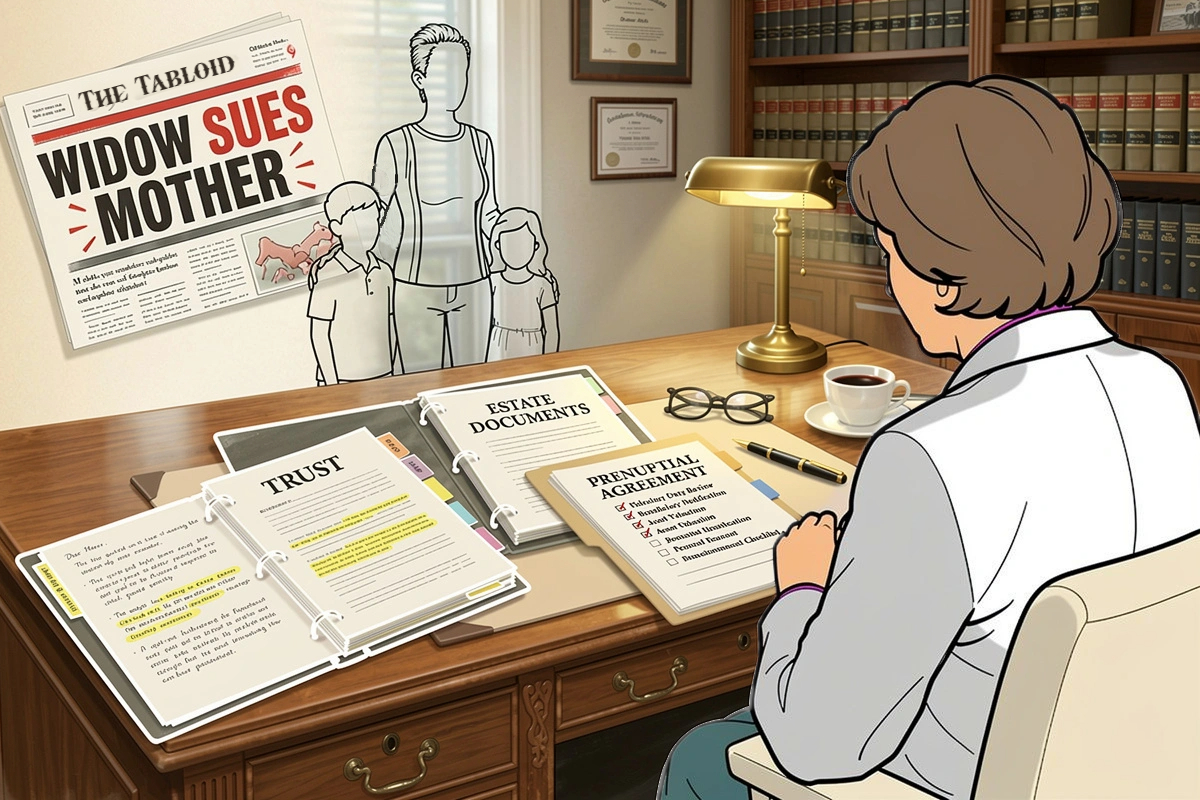
The recent headlines are jarring. CNN: “Malcolm-Jamal Warner died tragically one year ago. Now his widow is suing his mother.” This headline tries to juxtapose a tragedy against an allegedly cold, aggressive act of suing a mother. The New York Times: “Widow of Malcolm-Jamal Warner Sues His Mother for $1.2 Million.” This one sounds like a greedy money-grab against a grieving mother.
In fact, it appears that Tenisha Delilah Warner is following the proper steps to ensure that her deceased husband’s stated wishes are carried out. According to both articles, there are statements in a Trust that Malcolm-Jamal Warner set up to guarantee life insurance proceeds to his wife and/or child if he should die first; and agreements between Mr. and Mrs. Warner in a prenuptial agreement. A Prenuptial Agreement is a contract, enforceable like other proper contracts. If one of the contracting parties is deceased, an enforcement claim must be brought against the deceased party’s estate. A Trust must be administered by an appointed Trustee according to the instructions in the Trust Document as long as it is a proper and legal Trust document. If a beneficiary of a Trust is not receiving what was designated for them in the Trust Document, a claim must be brought against the Trust, with the Trustee as the person representing the Trust. And according to news reports, Mr. Warner’s mother is the personal representative of Mr. Warner’s estate and the current Trustee of his Trust.
As such, it is appropriate for Tenisha Warner to bring her Trust and Prenuptial Agreement claims against Mr. Warner’s Trust and estate. Mr. Warner’s mother is likely not being sued as an individual, but in her capacity as Trustee of the Trust and Personal Representative of his estate. Mr. Warner’s mother must carry out her duties to effectuate the terms of the Trust and the terms and intent of any Will he may have had. It is also her duty in this role to gather and pay any legitimate debts of Mr. Warner’s. That would include prenuptial agreement contract claims, as well as any other debts such as mortgages, credit cards, or other contracts he had entered into before his death.
Whether or not Tenisha Warner is owed all she claims is for the courts to decide, unless the Trust’s Trustee and estate Personal Representative reach an agreement with her that settles those claims. In settling such claims, Mr. Warner’s mother must not only consider Tenisha Warner’s claims, but the estate’s obligations to any other named beneficiaries of either the Trust or Mr. Warner’s estate.
Contrary to the sensationalist headlines, the wife does not appear to be suing the mother as an individual, but rather in her capacity as Trustee and Personal Representative of the deceased person’s estate. And the mother has the complicated and weighty task of reviewing and understanding the terms of the Trust and any Will (or intestate laws if there is not a Will), and administering the Trust and the Estate according to the Trust terms, the Will’s terms, and the law of Georgia, the state where his estate is being administered. In times like these, both surviving family members need steady guidance by an experienced Trusts and Estate attorney, as well as an attorney experienced in fiduciary litigation, namely, litigation over Trusts and Wills.
