BALTIMORE
10075 Red Run Boulevard
Suite 401
Owings Mills, MD 21117
(443) 738-4900
FREDERICK
10 North Jefferson Street
Suite 200
Frederick, MD 21701
(240) 220-2415
BETHESDA
7315 Wisconsin Avenue
Suite 400W
Bethesda, MD 20814
(240) 220-2415
Love, Commitment…and a Registered Domestic Partnership? Why it May be Worth Saying “Yes” to in Maryland
August 13, 2026
Alicia M. Balanesi
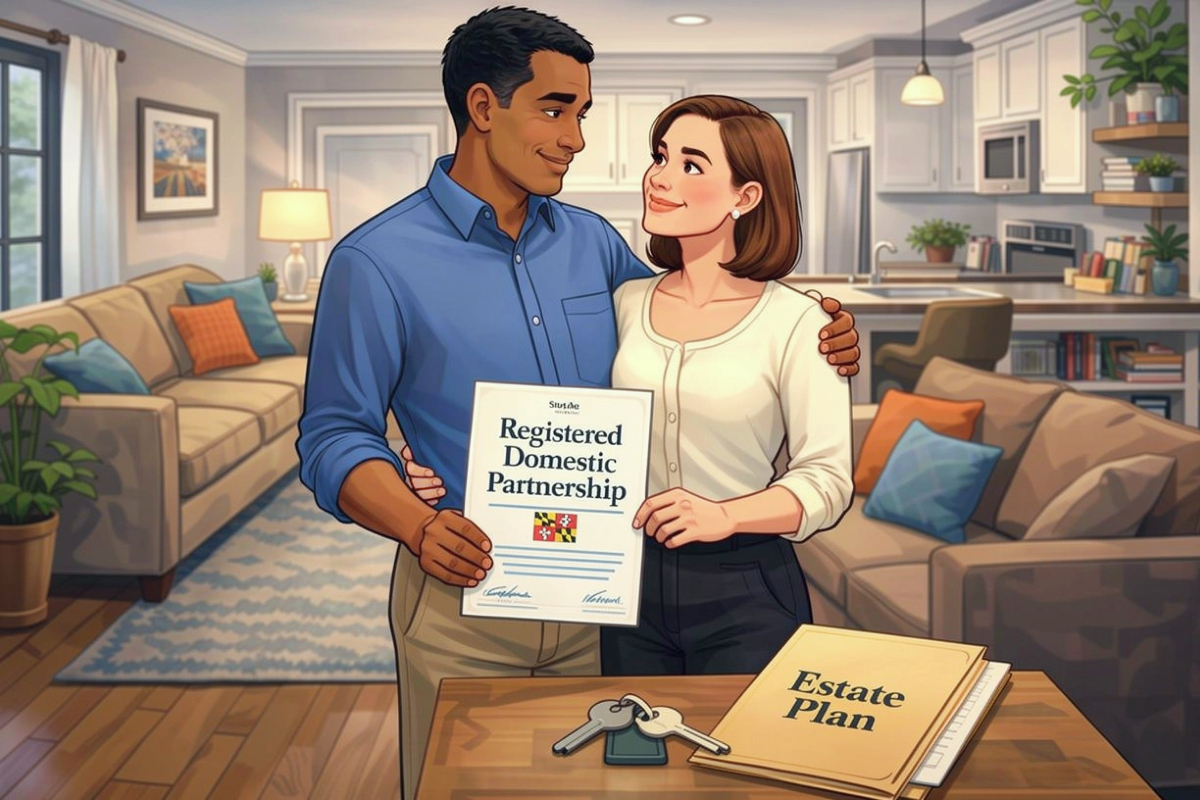
For many couples these days, "happily ever after" doesn't necessarily include a wedding, as new generations want different lifestyles, trends are constantly changing, or maybe it simply is not a fit for you. Whether it's personal preference or for financial considerations, deciding that a marriage license isn't part of the plan, couples are now more than ever, choosing committed, cohabitated relationships without tying the knot.
According to the most recent census, over 20 million adults in the United States live with an unmarried partner, and for young adults (under 25), living with an unmarried partner is presently more common than living with a spouse.
As a result, many states, including Maryland, have taken steps in recognizing that commitment in a meaningful way. Beginning in 2023, Maryland created a Registered Domestic Partnership system that provides unmarried couples with several estate planning benefits previously reserved for married spouses. While registering isn't a substitute for a comprehensive estate plan, it can provide valuable legal protections that every committed couple should understand. Before this change, surviving domestic partners were often treated as legal strangers after the death of a loved one. Imagine spending decades building a life together only to discover that, from an estate administration perspective, the state of Maryland viewed you more like a friendly neighbor than a lifelong loving partner.
Today, if you choose to register your partnership in Maryland by filling out a simple form and filing this simple form with the Register of Wills in the County in which you reside, you will receive several important protections.
First, a surviving registered domestic partner is exempt from Maryland's inheritance tax, just like a surviving spouse. Previously, many domestic partners faced a 10% inheritance tax on assets inherited from their deceased partner, with only limited exceptions for jointly owned primary residences. By registering your partnership with the state, if you or your partner intend to leave assets to each other, then you would both be exempt from the inheritance tax in Maryland.
Second, if a partner dies without a Will, a registered domestic partner now has rights under Maryland's intestacy laws that closely mirror those of a surviving spouse. Rather than being left with no automatic inheritance, a registered domestic partner may inherit according to Maryland law. The surviving partner also receives priority to serve as Personal Representative of the estate and may qualify for the statutory family allowance.
Think of registering your partnership as being akin to installing smoke detectors in your home. A working smoke detector offers a clear benefit to protect you from fire — but you still want homeowner's insurance. Likewise, a domestic partnership registration provides valuable protections, but it works best alongside a thoughtfully prepared estate plan. Maryland's Registered Domestic Partnership law reflects the reality that families come in many forms. It offers important protections for couples who choose not to marry while recognizing the financial and emotional partnerships they have built together. And while love may conquer all, good estate planning makes the paperwork much easier. Whether you're married, registered as domestic partners, or simply planning for the future together, taking the time to put the proper legal documents in place is one of the greatest acts of love you can leave behind — for the person who matters most.