
BALTIMORE
10075 Red Run Boulevard
Suite 401
Owings Mills, MD 21117
(443) 738-4900
FREDERICK
10 North Jefferson Street
Suite 200
Frederick, MD 21701
(240) 220-2415
BETHESDA
7315 Wisconsin Avenue
Suite 400W
Bethesda, MD 20814
(240) 220-2415
Have You Filled Your Bucket?
March 18, 2026
Diane Kotkin
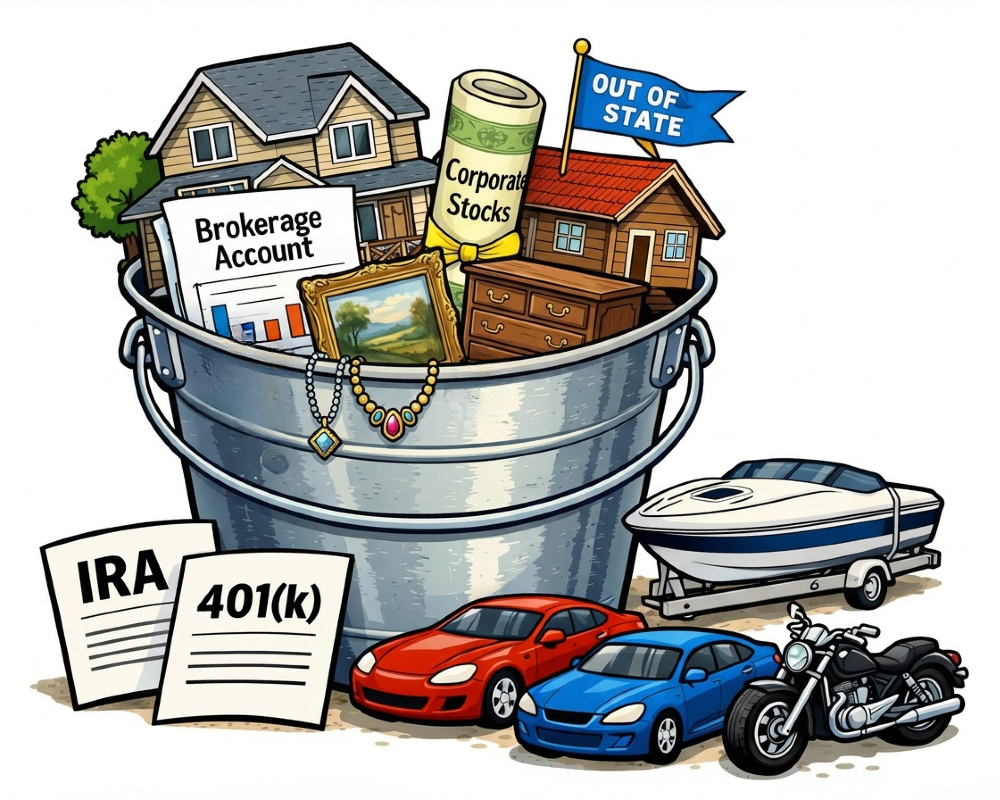
You may have heard that a revocable living trust is usually the best way to avoid the dreaded probate process. However, creating a trust is just the first step to protect your loved ones from the financially, emotionally, and mentally draining experience of probate.
Your Trust Is Like a Bucket
Creating a trust is like making a bucket to hold your money and property for you. During your lifetime, you are the one holding the bucket (the one serving as trustee). As the holder of the bucket (the trustee), you continue to manage and invest the accounts and property inside it as you did before you transferred them into it. During your life, you continue to have full access to use and enjoy the accounts and property in the bucket, just as you did before. The items in your bucket are distributed when you die according to the instructions in the trust agreement and will not have to go through probate court or be subject to the state’s one-size-fits-all default plan. If you die with most of your accounts and property outside the bucket, these items may have to go through the probate process, even if you have a will. An added benefit of using a trust is that you can decide who holds the bucket when you are no longer able to or after you have passed away by naming a successor trustee to manage, invest, and distribute the accounts and property according to your wishes laid out in the trust agreement. You also determine who will inherit the accounts and property in the bucket after you pass away.
What Should Be Put in My Bucket, and How Do I Do It?
You likely own many different types of accounts and property. Some, such as investment or brokerage accounts, are best added to your bucket during your lifetime by transferring their ownership from you as an individual to you as the trustee of your trust via a change of ownership form. Other items whose ownership is not shown in any formal record, such as jewelry, collectibles, and antiques, can be transferred to the trust by assignment. There may also be items best transferred to your trust through a beneficiary designation, such as retirement accounts, life insurance policies, or a small checking account used for household expenses. Because the types of accounts and property and planning objectives can vary, we encourage you to meet with us to discuss the best course of action for funding your trust.
What Should Not Be Put in My Bucket? Will It Have to Go Through Probate?
Some accounts and property are unique and must be handled differently during the estate planning process.
- The ownership of an individual retirement account and other tax-deferred retirement accounts should generally not be transferred to your trust during your lifetime or at all, depending on your planning strategy. However, it may be wise to name the trust as a beneficiary or contingent beneficiary under certain circumstances. Regardless of who you name as a beneficiary, these accounts will not go through probate if there is a named beneficiary. Due to the tax considerations surrounding these types of accounts, it is best to consult with us before making any changes to the accounts or their beneficiaries.
- Automobiles, boats, motorcycles, or other recreational vehicles should remain in your individual name. In the event of an accident, an injured party could potentially be more likely to sue you if a trust owns the vehicle, because they might see trust ownership as an indication that you have deep pockets. In addition, many states have processes to handle the transfer of some or all of these types of property outside formal probate. Be sure to check your state laws, as some states limit how many vehicles or the aggregate value of all vehicles that can be transferred outside probate without a trust.
Why Should I Worry About Filling My Bucket?
In addition to avoiding the lengthy probate process, another benefit of filling your bucket is that you make the trust administration process easier for your successor trustee. A properly filled bucket will do all of the following:
- Make it easier for your successor trustee to access and manage the necessary accounts and property if you are unable to handle your own financial affairs
- Ensure that the accounts and property owned by the trust pass directly to beneficiaries without the delays, costs, and public process of probate court
- Make it easier and faste rfor the successor trustee to identify, manage, and distribute trust property without needing to track down and retitle it after your death
- Provide clear ownership and control that helps prevent disagreements over who is entitled to act and how assets should be handled
My Bucket Is Empty! What Do I Do?
Ensuring that your trust is properly funded is crucial. If you have not already done so or it has been a while since you last reviewed the ownership and beneficiary designations of all your accounts and property, here are the next steps you should take as soon as possible.
- Make a list of all your accounts and property. You may have already provided this to us as part of the estate planning process. If so, review this list and ensure that it is still accurate. Have you acquired or disposed of any accounts or property since your planning was initially done? As mentioned, creating a new list not only helps you ensure that everything is accounted for but also makes it much easier and faster for your successor trustee to step into the role at your death
- Review your existing documents. Ensure that the necessary changes to the account ownership or beneficiary designations have been made. If these changes have not been completed, be sure to take this important step. This process is also a great opportunity to review your estate planning documents to ensure they still meet your objectives
- Contact the appropriate parties. If changes need to be made to the ownership or beneficiary designations of your accounts or property, contact the appropriate parties (bank, brokerage firm, us, etc.) to obtain the necessary paperwork to make the changes. You may also need a new deed prepared for any new homes, rental properties, cottages, or other pieces of real property you have purchased
- Complete the paperwork. To ensure that the paperwork is properly completed, you must ensure you have all the necessary information. You may also be required to provide proof of the trust’s existence, in which case we can provide you with the appropriate documentation. If you need assistance completing the ownership or beneficiary designation change forms, we can help you. If real estate needs to be transferred to your trust, we can assist with preparing and recording the deed.
Assistance When and How You Need It
Funding your trust is too important to let uncertainty get in the way of completing the process. Call us to discuss the best way we can help you.
