BALTIMORE
10075 Red Run Boulevard
Suite 401
Owings Mills, MD 21117
(443) 738-4900
FREDERICK
10 North Jefferson Street
Suite 200
Frederick, MD 21701
(240) 220-2415
BETHESDA
7315 Wisconsin Avenue
Suite 400W
Bethesda, MD 20814
(240) 220-2415
Give Me a Break, Give Me a Break…
March 5, 2026
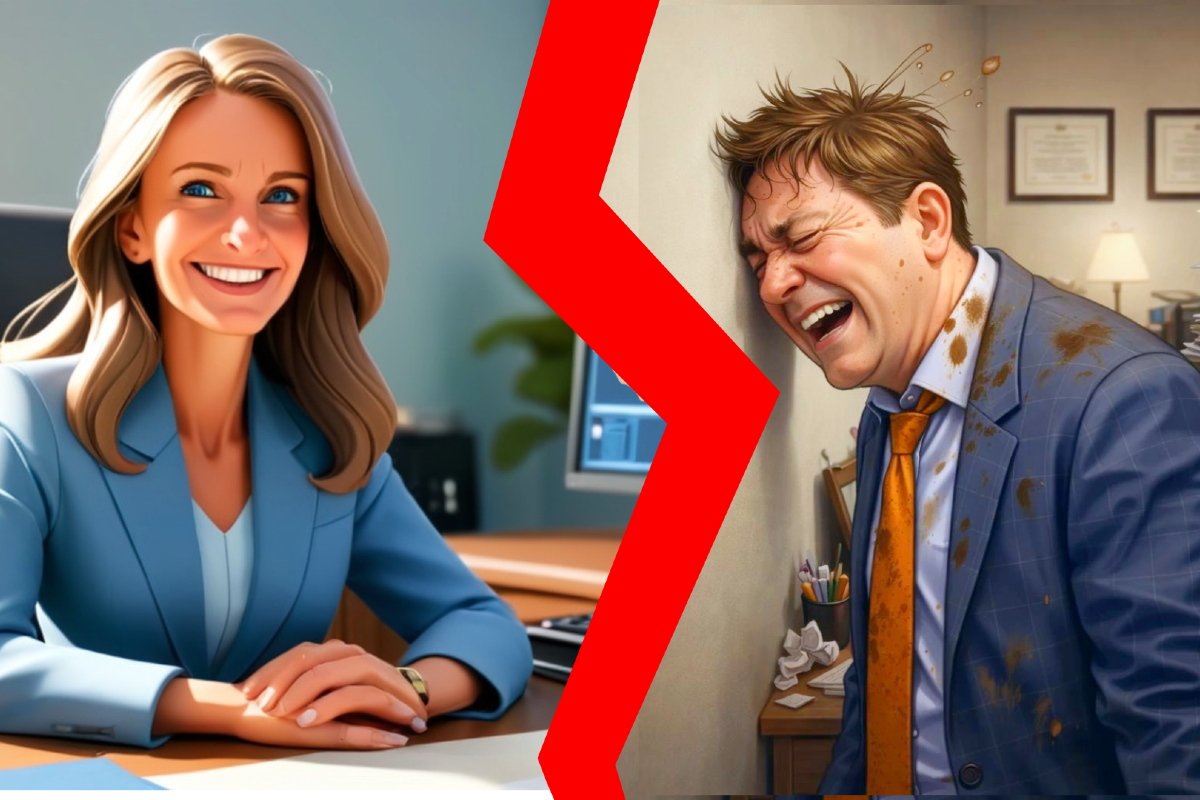
<span style="font-weight: bold;">by Laura L. Rubenstein <span style=color:red;>(with counterpoint by an overworked Don Walsh)</span></span><hr style="height: 0px; border: none; margin: 8px;">The other night I was driving home after a very busy workday <span style=color:red;>(at least you got to go home at a decent hour)</span> when the announcer from my favorite public radio station instructed the listeners to take a moment to do some deep breathing. He instructed, “Breathe in” while making an audible inhaling sound, and then “Breathe out” while he exhaled. I found myself following his directions and I’m certain it reduced my stress level before I walked in the door well after dinner <span style=color:red;>(dinner?!? I got to make myself a PBJ on stale bread)</span>.
Many try to tackle an ever-increasing workload by choosing to skip lunch and work longer hours. <span style=color:red;>(Who has time for lunch!? Is there an end to my day?)</span> Sometimes employers permit <span style=color:red;>(insist upon)</span> this if there’s an important deadline and no concern about overtime <span style=color:red;>(that is why they made me salary)</span>. But most employers want to protect their workers from burnout <span style=color:red;>(in this job market, there is always someone else ready to take your spot)</span>, which is why company policies require hourly workers to factor a mid-day lunch into an employee’s schedule, (e.g., “work hours are 9AM-6PM with a 1-hour unpaid lunch break from 12-1 PM”). The federal Fair Labor Standards Act also permits an employee to take short, paid breaks lasting between 5-20 minutes <span style=color:red;>(they installed motion detectors on the lights in the bathrooms to limit time in stalls)</span>.
But if you don’t get time off for lunch or breaks in your day and find yourself trudging through, remember that short breaks <span style=color:red;>(or copious amounts of caffeine)</span> can decrease back pain <span style=color:red;>(check)</span>, eye strain <span style=color:red;>(check)</span>,prevent exhaustion <span style=color:red;>(check)</span> and boost performance, among other things.
A growing body of literature and scientific studies published by the National Institutes of Health <span style=color:red;>(which we do not trust anymore since they added beef tallow to the top of the food pyramid)</span> focuses on energy management strategies used during working time. Those studies show that replenishment of energy can happen in short intervals, such as lunch breaks, scheduled breaks or micro-breaks, <span style=color:red;>(walking to the coffee machine)</span> defined as no longer than 10 minutes between work tasks.
Recommended activities for quick and effective breaks include:
- Taking a brisk walk
- <span style=color:red;> Run around the office screaming and waving your arms</span>
- Enjoying the sunshine and calm of nature
- <span style=color:red;>Walk into the woods and let out primal screams</span>
- Focusing on breathing
- <span style=color:red;>Panic attacks</span>
- Meditating
- <span style=color:red;> Closing your door and taking a nap</span>
- Listening to music
- <span style=color:red;>Practicing your trumpet in the office</span>
- Stretching
- <span style=color:red;>Repeatedly striking the wall with your head</span>
- Making a drink or snack
- <span style=color:red;> One that has plenty of alcohol</span>
- Interacting with a pet
- <span style=color:red;>Letting your rabid pitbull run free in the office</span>
Creativity is also boosted when one steps away from an intense project or assignment <span style=color:red;>(as is your will to live)</span>. A study on micro-breaks for increasing well-being and performance published by the National Library of Medicine stated that “creative cognition” requires one to strategically search their own memories for task-relevant information <span style=color:red;>(why did I accept this job)</span>. In other words, even momentarily pushing aside the multiple demands in our workday make us better problem solvers. (See https://pmc.ncbi.nlm.nih.gov/articles/PMC9432722/#sec025).
So, give yourself a break. You’ll thank yourself. Now…Breathe In… and … Breathe Out…<span style=color:red;>(before you hit send on that email)</span> pet your cat <span style=color:red;>(the ADA provides protection if you are allergic)</span>, or refill your water bottle in the kitchen <span style=color:red;>(where we keep the office liquor)</span>.