
BALTIMORE
10075 Red Run Boulevard
Suite 401
Owings Mills, MD 21117
(443) 738-4900
FREDERICK
10 North Jefferson Street
Suite 200
Frederick, MD 21701
(240) 220-2415
BETHESDA
7315 Wisconsin Avenue
Suite 400W
Bethesda, MD 20814
(240) 220-2415
FAMLI Issues Remain Unresolved Going into Its First Year
October 1, 2026
Anthony Herman
Paid Medical Leave in Maryland is coming. Is your workplace ready? Throughout the remainder of the year, keep tuned to this website for Tony Herman’s insights into the decisions companies will have to make, day one concerns, and issues on the horizon, as Maryland employers (and employees) go into this brave new world.
Registration for FAMLI has now been open about a month. I have counseled many clients on choosing what type of plan to use, going through the registration process, and initial Handbook updates. There are still some questions I regularly receive, though, where I must give clients a terribly unsatisfying answer: “We’re going to have to wait and see.”
Employers now have hundreds of pages of statute, regulations, FAQs, and guidance to review; yet, indisputably, some significant practical questions remain as employers prepare for deductions to begin in three months and benefits to begin in 2028:
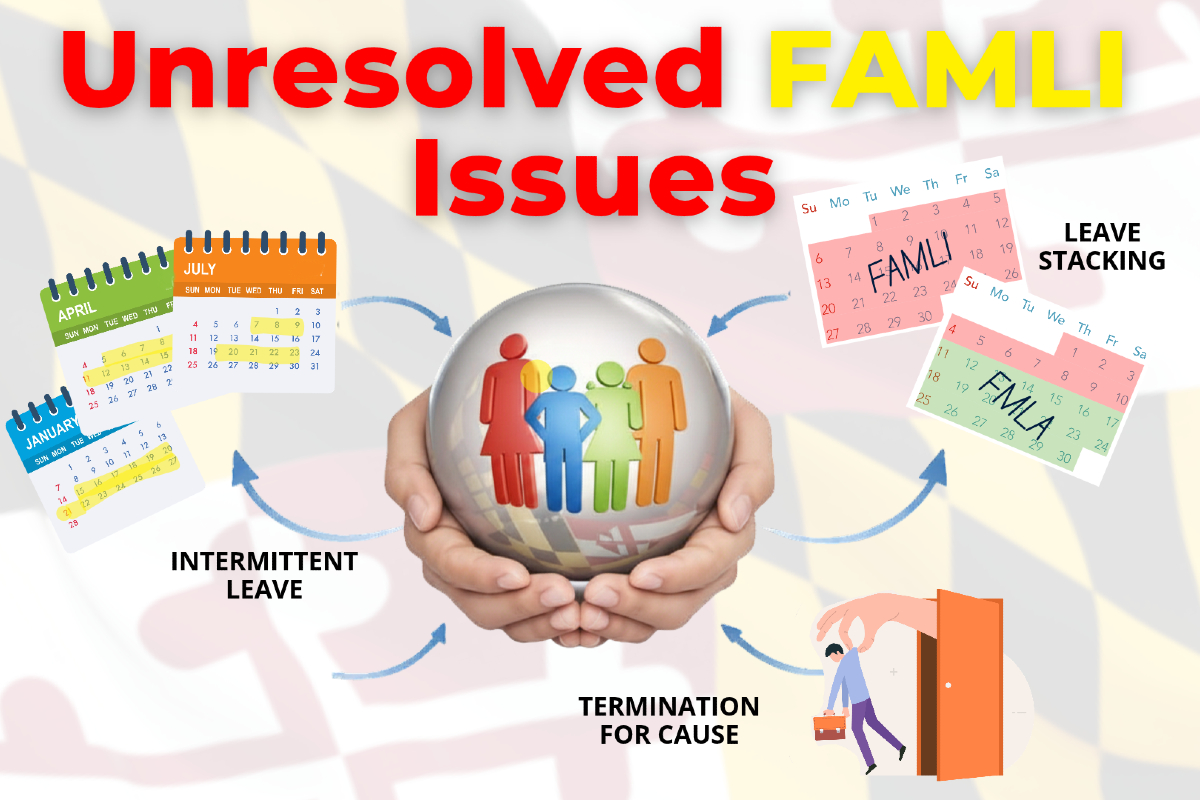
1. Just how much leave can an employee actually stack? The FAMLI law says that FAMLI and federal Family and Medical Leave Act (FMLA) leave run concurrently when an employee is eligible for both. Simple enough, right? It is, except FAMLI and FMLA do not cover the same employees (in particular,employees who just changed jobs), the same employers (FAMLI doesn’t have size qualifications), or even all of the same family relationships (FAMLI’s is much broader). An employee can therefore exhaust 12 weeks of FAMLI without using a single day of FMLA – and potentially become entitled to another lengthy period of protected leave soon thereafter if they do qualify for FMLA at that time. This doesn’t seem like an intended result, but unless further guidance is issued, that is what employers will have to plan for.
2. What does it mean that an employee on FAMLI can be terminated only “for cause”? Section 8.3-706(c)(1) of FAMLI provides that an employer may only terminate employment of an employee on FAMLI “for cause.” The only problem with that? “Cause,” in this context, is not defined anywhere in the statute or regulations. It is not a legal term with an inherent meaning (which is why all employment contracts should specifically define what “cause” means). There are many reasons why a company may need to terminate an employee for reasons that arguably may not meet the “cause” threshold. What about a reduction in force? Poor performance discovered during the leave? Courts have found these to be legitimate reasons for terminating an employee’s employment during FMLA leave. Will the same hold true for FAMLI?
3. What mechanisms will employers have to curtail intermittent abuse? Intermittent leave is a tricky situation for employers to navigate under FMLA. FAMLI adds another layer of difficulty. Employees are required to “provide reasonable and practicable prior notice to their employer of [the employee’s] intermittent leave schedule” and “the reason, dates, and duration for which intermittent FAMLI leave is necessary.” Again, though – “reasonable and practicable prior notice” are left undefined. What is “reasonable” to one is not reasonable to all. Employers jumping the gun and looking to discipline an employee for failure to provide notice will need to weigh how much they want to be a “guinea pig” in this area, at least until further guidance is provided.
These are but a few areas where employers will be hoping for more answers in the coming 15 months before leave benefits begin. Contact an RKW Law Group employment attorney to discuss how your company can best be prepared when they do.
